CAR-T cell therapy is a cancer treatment that takes cells from the body and genetically changes them so they can fight cancer. It's most often used to treat cancers that affect blood cells, such as certain types of leukemia, lymphoma and multiple myeloma.
CAR-T cell therapy stands for chimeric antigen receptor (CAR)-T cell therapy. This treatment falls under the category of immunotherapy. Immunotherapy for cancer harnesses the body's immune system to attack cancer cells.
Making CAR-T cells starts with collecting a person's own T cells. T cells, also known as T lymphocytes, are a type of white blood cell. T cells are key players in the body's immune system because of their ability to identify and attack cells that don't belong in the body, such as germs and cancer cells.
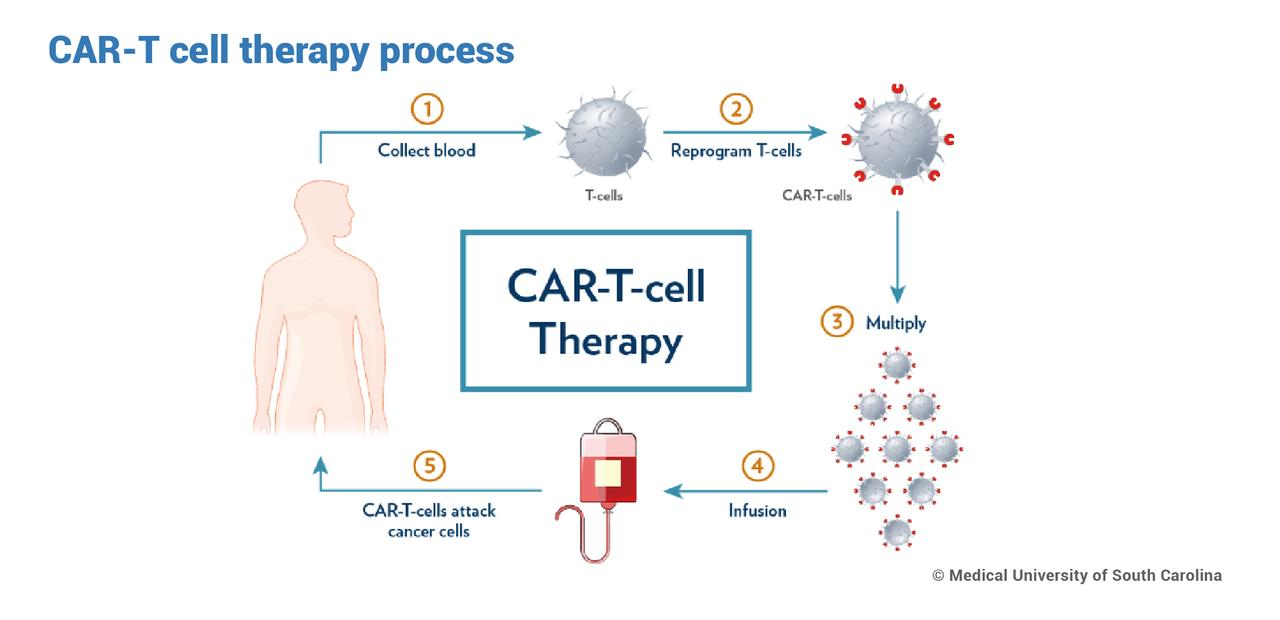
For CAR-T cell therapy, T cells are collected from the blood using a process called leukapheresis. In the lab, these T cells are modified to produce synthetic proteins called chimeric antigen receptors (CARs).
The modified cells are called CAR-T cells. The cells are grown to much higher numbers in the lab and then infused back into the person's bloodstream.
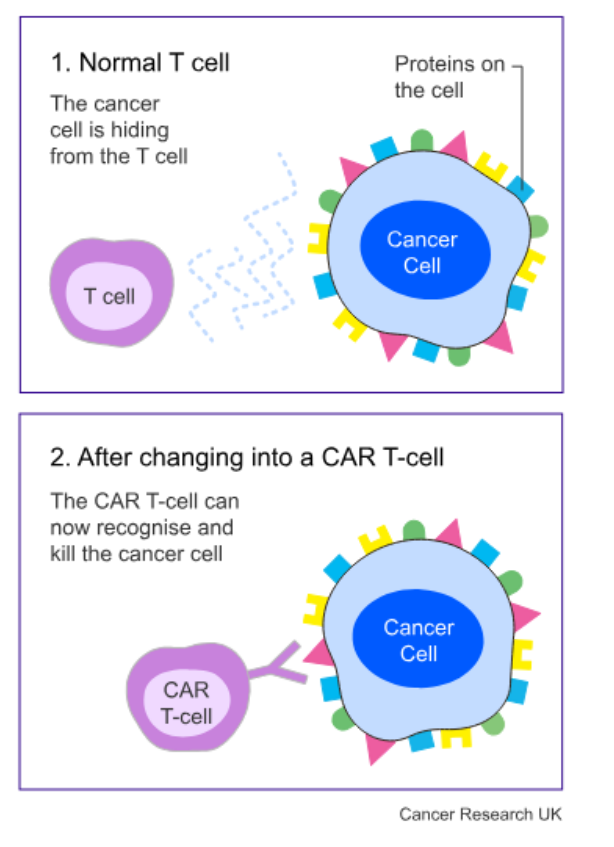
The synthetic CARs allow the T cells to bind to specific proteins called antigens on cancer cells. This binding activates the T cells to kill the cancer cells. Dying cancer cells trigger further immune responses against the cancer. In addition, CAR-T cells can keep multiplying in the body, producing lasting anticancer results.
CAR-T cell therapy is used to treat cancers that affect blood cells. This includes some types of leukemia, lymphoma and multiple myeloma.
CAR-T cell therapy may be recommended when a cancer:
Doesn't respond to other treatments, also called refractory cancer.
Comes back within 12 months after the first treatment, or after several prior treatments, also called recurrent or relapsing cancer.
CAR-T cell therapy is approved to treat recurrences of the following cancers:
B-cell acute lymphoblastic leukemia. This type of blood cancer is the most common cancer found in children.
Chronic lymphocytic leukemia. This leukemia progresses more slowly than other leukemias. It occurs most often in older adults.
Certain B-cell non-Hodgkin lymphomas. Lymphomas are cancers that affect white blood cells in the lymphatic system — a network of organs, glands, vessels and clusters of cells called lymph nodes. B-cell lymphomas for which CAR-T cell therapy may be an option include diffuse large B-cell lymphoma and primary mediastinal large B-cell lymphoma. They also include high-grade B-cell lymphoma, aggressive B-cell lymphoma not otherwise specified, follicular lymphoma and mantle cell lymphoma.
Multiple myeloma. This uncommon form of blood cancer affects bone marrow. The cancer forms in a type of white blood cell called a plasma cell.
CAR-T cell therapy may not be for every person diagnosed with one of these cancers. Discuss the treatment risks and benefits with your cancer team. Also keep in mind that CAR-T cell therapy is evolving for many different types of cancers, sometimes in clinical trials. Ask your team if a clinical trial may be right for you.
How Does CAR-T cell Work?
T cells are collected from the blood. This process is called apheresis.
In the laboratory, scientists change the T cells to become CAR-T cells. You might hear this called genetically engineering the T cell. They do this by adding a gene to the T cell that causes the cell to make proteins on their surface called chimeric antigen receptors (CARs). The CARs can recognise and target a specific protein on the surface of the cancer cells.
These changed T cells grow and multiply in the laboratory. Once there are enough CAR-T cells, you have a drip containing these cells back into your bloodstream. The aim is for the CAR-T cells to then recognise and attack the cancer cells.
The changes they make in the laboratory mean that they can stay in your body for long periods of time, recognising and attacking the specific cancer cells.
There are different types of CAR-T cell therapy made by different companies, these include:
tisagenlecleucel (Kymriah)
axicabtagene ciloleucel (Yescarta)
brexucabtagene autoleucel (Tecartus)
NMPA-Approved CAR-T cell Therapies (China)
In China, the National Medical Products Administration (NMPA) has also approved several CAR-T cell products to treat hematologic malignancies:
Generic Name
Brand Name
Target
Axicabtagene ciloleucel
Yikaida® (奕凯达)
CD19
Relmacabtagene autoleucel
Beinuoda® (倍诺达)
CD19
Equecabtagene autoleucel
Fukesu® (福可苏)
BCMA
Inaticabtagene autoleucel
Yuanruida® (源瑞达)
CD19
Zevorcabtagene autoleucel
Saikaize® (赛恺泽)
BCMA
Ciltacabtagene autoleucel
Kaweidi® (卡卫荻)
BCMA
Leniolyscabtagene autoleucel
Hengkailai® (恒凯莱)
CD19
Having CAR-T cell Therapy
Preparing for T cell collection
Before you have T cell collection your doctor might ask you to stop treatments such as steroids and chemotherapy. This is to help increase the number of T cells you have in your blood before they are collected. It also helps the T cells to be in good form.
You have several tests to make sure you are well enough to have your T cells removed.
Collecting your T cells
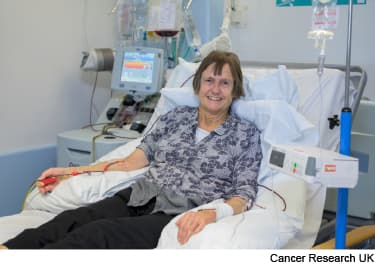
First you have a tube (cannula) put into a vein in each arm. You might need a special tube called a vascath or a PICC line if your veins in your arms aren't big enough for the cannula.
One tube removes the blood and passes it into an apheresis machine. The machine separates the different parts of the blood.
For CAR-T cell therapy, the machine takes out your T cells. The rest of your blood cells and normal blood fluid go back into your body through the tube in your other arm.
It can take between 4 to 6 hours to collect your T cells.
The specialist nurse sends your T cells to the laboratory to make CAR-T cells. This can take several weeks. When they have enough CAR-T cells, they freeze them.
Before you have the CAR-T cells
Bridging treatment
While your CAR-T cells are being made some people might need treatment such as chemotherapy or radiotherapy. This is known as bridging treatment. This is to help keep the cancer under control until the CAR-T cells are ready.
Lymphodepletion
Immediately before you can have the CAR-T cells into your bloodstream you have chemotherapy over a few days. This starts about a week before the day you have them back. This lowers and kills the number of T cells in your blood and prepares your body for the CAR-T cells. Doctors call this lymphodepletion. You might also hear it called conditioning treatment.
Having the CAR-T cells
A specially trained nurse defrosts the CAR-T cells on the ward. They give you medicines into your vein to stop allergic reactions.
You then have the cells as a drip into your bloodstream. This usually takes less than 30 minutes.
You are closely monitored during and after the treatment.
Staying in hospital
The doctors and nurses need to monitor you closely for the first 2 weeks after CAR-T cell therapy.
If you're well after 2 weeks, you may be able to go home if you live within one hour of the hospital. Or you may be able to stay in a hotel or other residence nearby, which the hospital pays for.
One of the requirements to be able to leave the ward if you're well after 2 weeks is that you have someone with you 24 hours a day. If you don't have someone that can be with you 24 hours a day, you must stay in hospital for the first month after the treatment.
If you are discharged after 2 weeks you are still closely monitored. This involves visiting the day care unit several times a week. This is also called an ambulatory clinic or Ambi-care. On the days you do not visit the ambulatory care unit you get a phone call to check how you are doing. You will also have the numbers of people to contact if you get any problems.
If you're not well enough to be discharged after 2 weeks you will have to stay in hospital until your healthcare team think it is safe for you.
Your healthcare team asks that you stay within one hour of the hospital for up to 30 days after the treatment. Each CAR-T cell therapy hospital has slightly different advice. So it is important to follow the advice of the hospital you are under.
Some content in this article is adapted from the official website of Cancer Research UK.